
A tree doesn’t have to fall to be dangerous. Subtle warning signs often appear long before a tree becomes a serious risk to your home, your family, or your property.
At NEON Monkey Tree Services, we help North Texas homeowners recognize when a tree needs professional attention—and when it’s time to involve a certified arborist. Knowing what to look for can prevent costly damage and unsafe situations.

Why Early Tree Risk Detection Matters
Trees can decline slowly or fail suddenly. Disease, decay, root damage, and structural imbalance weaken trees from the inside out, making them unpredictable during storms or high winds.
Calling a certified arborist early helps:
- Prevent unexpected limb or tree failure
- Protect homes, vehicles, and utility lines
- Preserve healthy trees whenever possible
- Avoid emergency removals and higher costs
If something looks “off” about a tree, it’s worth taking seriously.
Visible Signs a Tree May Be Dying
Some of the clearest indicators of a declining tree are visible year-round. If you notice multiple symptoms at once, the risk increases significantly.
Common signs include:
- Large dead branches or thinning canopy
- Peeling, cracking, or missing bark
- Fungal growth or mushrooms near the base
- Oozing sap or wet-looking spots on the trunk
- Leaves that are discolored, undersized, or falling early
These symptoms often indicate internal decay or disease that requires professional evaluation.
Structural Warning Signs That Indicate Danger
Even a living tree can be dangerous if its structure is compromised. Structural defects are a leading cause of tree failure in Texas storms.
Watch for:
- Deep cracks or splits in the trunk
- Co-dominant stems with narrow branch unions
- Heavy limbs extending far over structures
- Trees leaning more than before
- Previous storm damage that was never corrected
A certified arborist can determine whether corrective pruning, support systems, or removal is the safest solution.
Problems Below Ground Homeowners Often Miss
Root issues are harder to see but just as dangerous. Construction damage, soil compaction, and poor drainage weaken a tree’s anchoring system.
Warning signs of root problems include:
- Uplifted or cracked soil near the base
- Sudden leaning after rain or wind
- Dieback in the canopy with no visible trunk damage
Professional tools like air spading allow arborists to safely inspect roots and address issues without harming the tree.
When Tree Trimming Can Reduce Risk
Not all dangerous trees need to be removed. In many cases, targeted tree trimming can eliminate hazardous limbs and restore balance.
An arborist may recommend pruning to:
- Remove dead or failing branches
- Reduce weight on overextended limbs
- Improve airflow and structural integrity
For trees with split trunks or heavy limbs, additional support through cabling and bracing may be necessary.
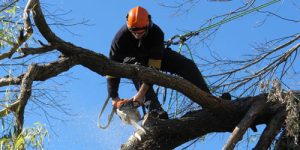
When Tree Removal Is the Only Safe Option
Some trees cannot be saved. Advanced decay, hollow trunks, or severe root failure often make removal the safest choice—especially when trees are close to homes or power lines.
Our professional tree removal services are designed to safely eliminate high-risk trees while minimizing impact on your property.
Why You Should Call a Certified Arborist
Certified arborists are trained to assess tree health, diagnose problems, and recommend science-based solutions. They look beyond surface symptoms to evaluate long-term safety and tree viability.
Through our professional arborist services, NEON Monkey Tree Services provides expert evaluations homeowners can trust.
Don’t Wait Until a Tree Becomes an Emergency
If you’re unsure whether a tree on your property is dying or dangerous, it’s better to act early. Waiting until a storm or collapse occurs often leads to higher costs and greater risk.
Contact NEON Monkey Tree Services to schedule a certified arborist inspection and get clear, professional guidance on the safest next steps for your trees.